All my life, I’ve used catch-phrases. During my brief law enforcement career, we all said, ‘Felons are inherently stupid!’ In my military career, I said , ‘Leadership is not a popularity contest!’ (Okay, I also used that one in my civilian work, too!) But now I have a new catch-phrase.
A few days ago, a good friend sent me some pictures of wildlife that were in his backyard. He commented that they weren’t like my pictures. His comment got me to thinking about how to respond. I came up with, ‘Don’t judge your photography using other people’s pictures!’
Then my mind exploded! I’ve avoided anything even remotely profound for many years and here I was. My mind is thinking – that’s good advice outside the photography world, too. Live your life and don’t use other people to determine your self-worth.
DON’T JUDGE YOUR PHOTOGRAPHY USING OTHER PEOPLE’S PICTURES!
With that said, here’s a few pictures from the past couple months. The first set is the result of chasing the Big Boy Locomotive around northern California earlier this month.
This is the Big Boy as it approached the Clio Grade Crossing!Our next contact was the Williams Loop!We hadn’t planned on this being our final contact as the Big Boy was between tunnels exiting the Keddie Wye, but traffic and construction zones had other plans!A family of Great Horned Owls visited our neighborhood every evening for a couple weeks. It’s nice when the wildlife comes to you for a change!I spent a few days in southern Oregon and northern California taking pictures of waterfalls!I made some new friends and had a wonderful time!We got up early and visited the Hot Air for Hope Balloon Festival!But we went out for breakfast with friends after the balloons took flight!A friend and I found some young Yellow Bellied Marmots who were very accommodating!And I’ll finish up with a few wildflowers from the nearby mountains!It was a hike that day, but what a glorious day!
Anyone who is in a relationship or who has children knows about ‘The LOOK!’ Some of us get it more often than others because, well, we are who we are!
The LOOK is given to say many things, depending on the context and situation, of course. Sometimes, The LOOK conveys disapproval, amazement, or just annoyance. The LOOK rarely implies any kind of approval so when one gets The LOOK, one knows they have generally erred in some way.
My Eagle Season began on October 23, 2023, when I was out and made my first Eagle pictures. Since then, I have ventured out 37 times and have made more than 9,800 image files. My season is winding down and I’ll only get out a few more times. In a couple weeks, I transition to railroad and steam locomotive photography. Stay tuned for that!
I’ve shared my images with friends and on Facebook. One of my friends asked me if I ever made a bad picture. I chuckled before responding to the question. Think about it, I have captured more than 9,800 pictures of Eagles this year and I’ve shared a few dozen. Like most photographers, I don’t share the bad pictures. And I have to thank the multiple software manufacturers whose software makes many of my images sharable.
Light is a challenge, particularly with adult Bald Eagles (see my recent blog about those challenges). Even with modern autofocus systems, focus is always a challenge especially with wildlife. They hide in the trees behind the branches. They move unexpectedly. They’re often really far away (I use lenses with long focal lengths to make subjects bigger on the sensor!). And while it would be perfect to always use a tripod to minimize camera shake, that’s not always practical (subjects often leave before one can get a tripod set up!). Of course, there’s always photographer error in camera settings and position to take the picture.
On that note, when you are buying a picture and lamenting the price, remember that you are not simply buying a print. You’re buying a photographer’s time and travel in the field, professional knowledge in taking a picture, time to develop the picture either in a darkroom or on a computer, and finally there’s a the print process.
With everything that a photographer has to know, the travel, cold mornings and nights, hot days, etc., one could wonder why people even do it. It’s because photographers go amazing places and see amazing things, recording those places and things for people who may not have the opportunity to go there and see them. Photographers love what they do and, even when it’s cold or hot or they’re tired, they enjoy their craft! Okay, end of rant!
It’s time to see ‘The LOOK’ from the Eagles this year. Enjoy – PHOTOROGR
As my Eagle season continues, I’m finding more immature Eagles than ever before. Bald Eagles don’t reach full maturity until they are 5 years old, and their colors change depending on their age. Most importantly, in the first few years, their feathers are brown and mottled white making them difficult to spot. They’ve been pretty good to me this year, though, by being active. It’s much easier to see them in flight and follow them to a perch. So, here’s to the Youngsters, making my Eagle season lots of fun!
In my last post, I discussed the challenges of proper exposure for photographs of mature Eagles. As you can see, the immatures are a bit easier. Enjoy – PHOTOROGR
For me, there are three kinds of Eagle pictures: Portrait, Interesting, and Action.
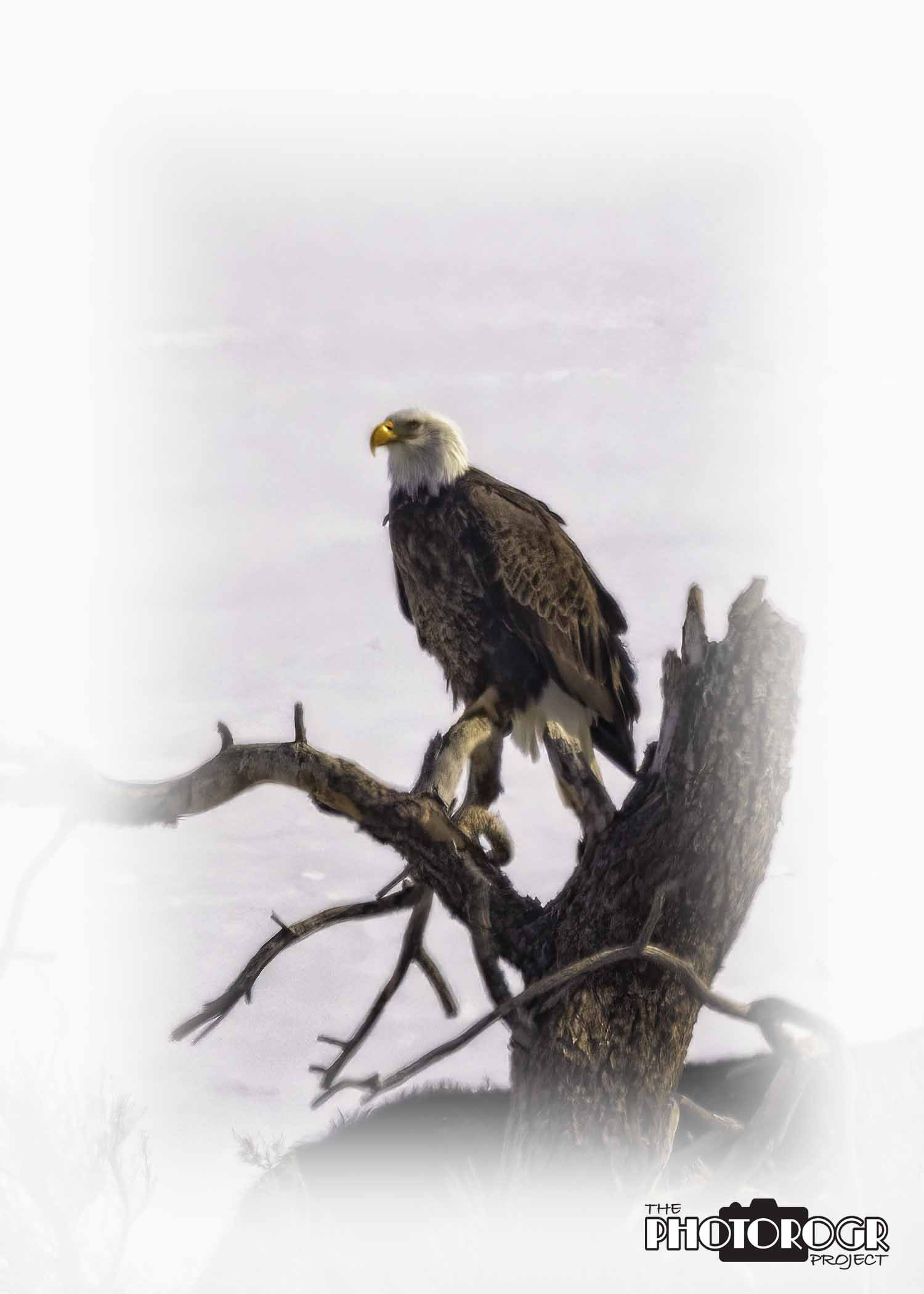
Portraits are an Eagle perched in a tree or on a fence post, sitting in the traditional regal pose with wings folded and beak raised slightly, head not quite in silhouette. This pose tells the world that they are the masters of the air.
An interesting picture is one where the Eagle cocks his head, looks down to survey its hunting ground, maybe some preening or flexing wings a little. The Eagle is on its perch but not assuming the regal pose described above.
Action photos speak for themselves. My action photos tend to be the moment of liftoff from a perch, possibly a couple more frames depending on the direction the Eagle takes. Sometimes, I can capture an Eagle in flight – generally tail feathers as they fly away (laughing all the way). Simply put, action photos imply movement and this post is about Eagles in motion! Now you understand the title of the post.
I have been fortunate to capture Eagles in flight at times, but never on the scale I’ve attained in this young Eagle Season (we’re just over halfway in!). I attribute my success to more patience while shooting, holding on a bit longer when photographing Eagle portraits and watching for the telltale signs that they Eagle might take flight. I also thank the Canon engineers for making their autofocus systems so much better so the camera holds focus on the subject in motion.
There are some challenges to making the liftoff pictures – let’s discuss them. Every decision in photography starts with the exposure triangle: aperture, shutter speed, and ISO.
Aperture is the opening that allows light onto the sensor. Large apertures allow more light but have a very short depth of field. Small apertures allow less light and have a deeper depth of field. Depth of field is the amount of the image that’s in focus, from near your camera to far away.
Shutter speed is the time the shutter is open. A fast shutter speed freezes motion and a slow shutter speed allows motion in a picture. A fast shutter speed keeps the detail in the Eagle in flight, and a slow shutter speed allows the wings to blur a bit.
ISO is the level of sensitivity in the camera’s sensor. A high ISO allows for taking pictures in lower light but introduces noise in the image. Modern camera systems are getting better every day in minimizing noise.
That’s not a detailed discussion of the elements of the exposure triangle, but it defines the terms enough for our discussion. One of the biggest challenges to Eagle photography is the color of the Eagles. Golden Eagles have dark brown feathers. Adult Bald Eagles have white heads and dark brown body feathers. Juvenile Bald Eagles have a mix of colors as they mature. The human eye can easily discern the difference in these colors, but cameras can not interpret the same tonal ranges. This makes proper exposure critical.
What is proper exposure? That depends on a multitude of other factors not directly related to the camera. Golden Eagle? Bald Eagle? Adult or Juvenile? Bright sun or shadow? My perfect conditions for Eagles is a slightly overcast sky that soften the sunlight, regardless of subject or surrounding area. I don’t get that often, so I have to make my settings match the light.
Then there’s the optics. I take pictures of Eagles using long focal length lenses, an 800 mm lens and a 100-500 mm lens. I also use a device called a teleconverter that magnifies what the camera sees. Remember my brief discussion on depth of field above? It gets more complicated because the longer the focal length on the lens, the depth of field compresses (becomes shorter). The longer the focal length, the less light can enter the camera body and hit the sensor. The best solution is higher ISO, but that introduces noise. Thank the engineers for making denoise software that corrects for that in the digital darkroom.
So that’s basic considerations. If your subject is in good, even light, shooting would be easy. But I want to be ready for the eventual liftoff so that’s where my settings are. I have my cameras set to shutter priority (Canon labels it Tv), 1/2000 second to freeze motion. At the focal length of my lenses, I let the camera pick. The cameras choices are limited however, so the piece of the exposure triangle that floats is the ISO. I set my cameras to Auto ISO, but I have a limit of 12,800 so I limit noise somewhat. Those settings generally serve me well, except in very low light (like an Eagle that has flown into a pine tree in a shadowy section).
Enough tech talk – let’s get into the pictures! All these images have been made in the last 2 months. Some of them have been on social media. Enjoy – PHOTOROGR
This is my new favorite Eagle image. I saw him in a tree along a Creek where I’d never seen an Eagle before, but I drive by very slowly these days just in case!
That’s the first line in Chapter 4 of Joel Sartore’s wonderful book, Photo Basics The Ultimate Beginner’s Guide to Great Photography. In my last blog, I referenced a different chapter. Light is an appropriate introduction to this blog, as great light was key to getting the images you will see.
Sartore quotes Jim Stanfield who said, “It’s not the light, but where you are in it.” As a wildlife and landscape photographer, I am very cognizant of where I am in relation to the available light. For landscape and scenery, I can somewhat control the light and where I am in it by showing up at dawn or dusk (to take advantage of the Golden Hour and Blue Hour), or when the light is optimal for the subject. Sartore also says, “The good news is that there are few completely unacceptable light conditions. Some light is more challenging to work with than others. Regardless, light can make or break a photograph, and how we face the challenge of mastering it is what shapes us as photographers.”
Wildlife is not always so forgiving. Critters don’t have a schedule or follow directions, and they don’t really care that they’re not in the best light for my camera. (Just try getting a model release!)
I’ve discussed the challenges of light in past blogs, and will likely do so in the future. But you may be asking, why is this critical to today’s blog? It’s simple. One afternoon, our workshop facilitators drove us to the National Elk Refuge, just north of the City of Jackson WY. Vehicles and pedestrians are not allowed on the Refuge, but one can buy tickets to ride in a horse-drawn sleigh. As we boarded the sleigh, our facilitator’s wife gave the driver’s direction – ‘These are photographers! They want the sun behind them and the Tetons in the background! Make it happen!’ Well, words to that effect anyway.
It worked, the drivers gave us great scenes and positioned us nicely for great shots. The sky also cooperated and gave us some of the best light on the Tetons for the week we were there. And the Elk – the Elk were very accommodating and magnificent!
These three Bulls were just chilling beside a creek. Just look at those antlers! The one on the right is the only one that paid us any attention.This is a youngster compared to many of the Bulls we saw.He definitely has the ‘I’m magnificent’ pose down!This is one of many images from this position. We had a line of Elk almost a mile long walking by. The Bull in the middle is a bit of a ham.Another ‘I’m magnificent’ pose. Deservedly so!
Well, I have more images from the last position than I could possible show here. The light worked for us on this afternoon, as we were able to position ourselves for best advantage. Having the Elk cooperate was a huge bonus. When you visit Grand Teton National Park during the winter months, the National Elk Refuge is a must see!
We saw this handsome fella’ on a different day. He was on a hillside outside the Elk Refuge. It was late afternoon and he was in shadow. The snow was flying which didn’t help. I was able to bring out the best in this picture in the digital darkroom.
I hope you enjoyed our afternoon on the National Elk Refuge. We were only in the sleigh for 2 hours, but it was a fantastic couple hours.
A few days ago, I was asked to provide some biography information for an undisclosed (for now anyway) project. This caused me to reflect inward a bit – talking about myself in a serious way doesn’t come easy to me. As a starting point, I pulled up my ‘About’ page here and reviewed the information I included there. One of the things I quickly realized is that I hadn’t updated the page in a very, very long time (like, I was still shooting my Canon EOS 60D). As a result, I have now updated my ‘About’ page and think I have a nice biography to share when I need it.
In my new biography, I talk about how I learned photography. I am mostly self-taught, meaning that I read a lot of books on photography. I also have a network of wonderful mentors who aren’t shy about critiquing my work and helping me to improve my photography skills. Back to the books! When selecting a book to read, I’m sometimes interested in something new (HDR, Macro, Night Photography, etc.) but sometimes I buy a general photography book because it looks interesting. My latest book is called Photo Basics The Ultimate Beginner’s Guide to Great Photography by Joel Sartore, published by National Geographic. Like so many books on photography, there is excellent discussion about cameras, lenses and gear, composition, exposure light, etc. Even though the information is pretty consistent with other books, I enjoy the repetition as a learning/reinforcing tool.
In this book, Chapter 6 is titled ‘Thinking Like A Photographer.’ (Stay tuned, as I’ll be referring to this chapter in future blogs!) The author’s introduction to the chapter is titled ‘Get Into The Mind-Set.’
“…Making good photographs means more than knowing how to work the controls on your camera. Thinking like a photographer means having a good eye for moments that could yield iconic images, but also developing patience and persistence, doing your research, and always showing up prepared…”
I often talk about developing my photographer’s eye, or seeing a photo in a given scene. This adds a new dimension to my approach to photography, even though I seriously doubt that I make images that could be considered iconic. Most important there is patience (I have little) and research (I don’t do enough). Maybe I’ll change.
The focus (pun intended) for today’s blog required little patience or research! While in Wyoming last December, we took a couple drives up the road paralleling the North Fork of the Shoshone River. This is the road between Cody WY and Yellowstone’s East Entrance. Many animals exit Yellowstone to winter in this area. The Rocky Mountain Big Horn Sheep are plentiful, often they are on the road itself to lick the salt off the road! No patience was needed as there were plenty of animals to shoot (pictures, always pictures) and they are where they want to be at any given moment, just knowing they are in the area is all the research one needs to do. And so, enjoy the Big Horns!
Lots of youngsters, just starting to get their curl!Lots of older Sheep as well. I had too much lens for a full body shot – one of the few problems I had in this area.Look at these cute faces! Wondering if they should worry about that clown with a camera.Those horns are tough, so one has to wonder what caused damage to that tip!I didn’t ask this handsome fella’ to pose this way, he’s a natural!This curious youngster walked towards me through the sagebrush. He was actually far away from me (I love my big lenses).They look healthy and well fed.
I have many more images from this magical time. I hope you enjoyed these few. Enjoy – PHOTOROGR
Ever since I was a little boy, Bison have been one of my favorite animals. When I was a little boy, the City of Cheyenne had a few Bison in pens in Lions Park, on the north side of town. In the summer months, we’d make lunch and head to the Park to have lunch with Dad. We’d frequently go by the Bison pens and marvel at their beauty. Eventually, the Bison went away, along with the Deer and Elk that the City had in adjacent pens. The Terry Ranch, south of Cheyenne on I-25, rebranded itself as the Terry Bison Ranch and we were able to see lots of Bison on our trips to and from Colorado. The Terry Bison Ranch also operated a restaurant with Bison on the menu. When we visited Mom and Dad, we stopped by for a delicious Bison Burger. After I got serious about photography, I’d stop by the Terry Bison Ranch for pictures.
Another favorite venue is the Bear River State Park in Evanston WY. I always stop there on my way home, say howdy to the Bison, and visit with the Park staff. It’s a great rest stop!
When my lovely bride and I visited Yellowstone National Park four years ago (has it been four years already?), we encountered Bison up close in the Hayden and Lamar Valleys. Taking pictures of Bison is challenging. Their bodies are dark, so the tendency is to overexpose to bring out detail. In bright light (like the middle of the day), that’s a deadly combination. Sometimes the magic works and sometimes it doesn’t. On that trip, the magic was mostly ‘doesn’t.’
Our recent trip to Wyoming, however, was a different story! We saw Bison on the North Fork of the Shoshone River, the road between Cody WY and the east entrance to Yellowstone, near Meeteetse WY, and along the road in Grand Teton National Park. The skies were frequently overcast, diffusing the light, so I was able to make some great Bison images on this trip. I hope you like them!
North Fork Road (along the Shoshone River between Cody WY and Yellowstone National Park):
Snow was present but so was the sagebrush, making photos a little easier.Don’t worry, I really wasn’t this close to this one. I love my zoom lenses!Watching the magnificent animal glide through the sagebrush was a wonderful experience.
West of Meeteetse WY:
This group was grazing the hillside. The light was great, but they were very far away.
Grand Teton National Park:
Fast forward to the Tetons Workshop. We encountered this herd along the road near the Triangle X Ranch, our base of operations. They became our subject a couple of times. The sky was overcast, diffusing the light which really helped. Sadly, the overcast obscured the Tetons causing us to look for alternative subjects.The famous snow face shot! In deep snow, Bison find food by pushing their massive heads into the snow until they reach the grass below! Photographers must be sharp, because they only ‘come up for air’ for a couple breaths before they plunge back in. We waited for one Bison to raise his head for more than 15 minutes. My arms were tired from holding the camera up in anticipation. Again, I wasn’t close – love my zoom lenses!One of my favorite Bison shots, and one of the few I made in portrait mode (meaning taller than wider – landscape mode is wider than tall). This beautiful Bison started walking towards our photo line, but didn’t get close enough to get worried! This Bison stood still for some time. Obviously not hungry, it didn’t go digging for food. It’s only movement was to look at the photo line before turning its head to give us a nice full profile.I changed my position a couple times to try to avoid the brush from obscuring the Bison. That’s the difference between this one and the previous shot. And of course, the head is turned.
Bison are magnificent animals! In the right light, they photograph very well. Or, if one is a good photographer, one can account for the light better! Regardless, the most important thing to remember is ‘Don’t Pet the Fluffy Cows!’
All good things must come to an end – and it’s time to ‘put a bow,’ signaling the end of the 2022-2023 Eagle season – for me, at least. Since we returned from our trip, we’ve seen many Eagles in the Carson Valley but lately there have been few the last week or so. The nearby area outside the Valley has had no Eagles in the last few weeks so, for me, Eagle Season is over. It’s okay, with the weather warming up a bit we have lots of other projects around to occupy my time. And I’m still processing image files from the trip.
2022 was my best Eagle year ever! While I’ve taken some great pictures in past years, I got more great Eagle shots in 2022 than any time before. As you saw in one of my ‘Be There’ posts, my Eagle year continued while I was in Wyoming. Here’s a couple more Carson Valley area shots from 2022.
On my final run around the Valley and nearby areas, I hadn’t been having any luck finding subjects to photograph. As I was turning around to head for home, this beautiful creature flew up (from the direction I had come) and landed in this snow covered tree as if to say ‘…well, you ignored me before so here I am now – take my picture!’I love it when I’m ready when the fun starts. He lifted off while I was shooting portraits.
With an incredible finish to 2022, I was excited to return home and get out to see what 2023 would bring. Sadly, my lovely bride and I both got a crud on the way home, so we stayed very close to home for a couple weeks after our return. When we were able to get out, we found lots of subjects. Most, however, were fairly far away – even for my Canon RF 800 f/11 lens. An 800 mm focal length really brings those far away subjects up close. When combined with the 45 MP sensor on my Canon EOS R5 camera body, I have lots of data to work with when editing images. My greatest challenge is getting good focus on far away subjects. That’s not the fault of the equipment, rather, it’s the limitations of the photographer’s skills. We all have our limitations. Thankfully, I found the Topaz Denoise and Sharpen software, which can rescue some of my poorly shot image files.
Here’s the stuff from 2023! All in the Carson Valley.
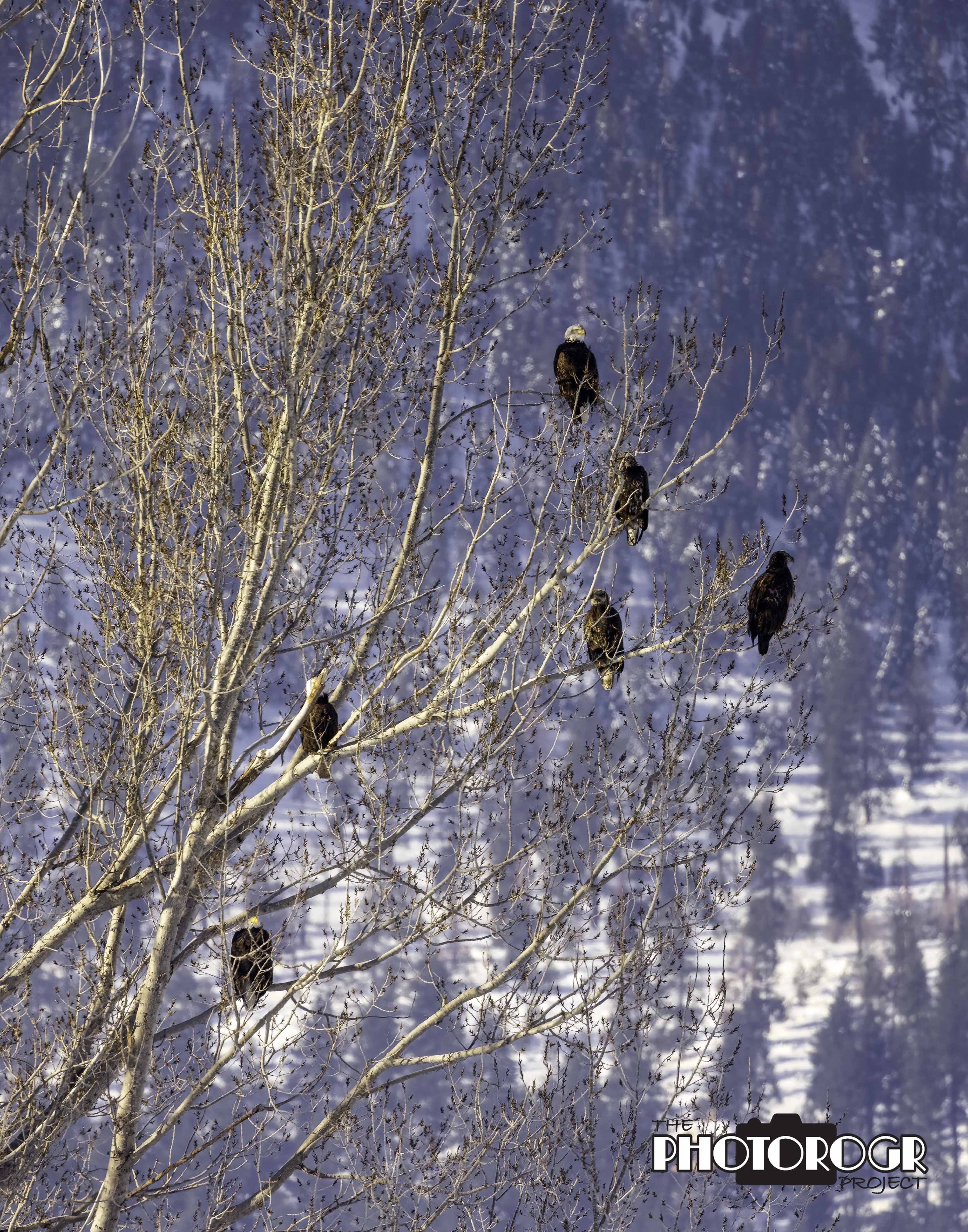
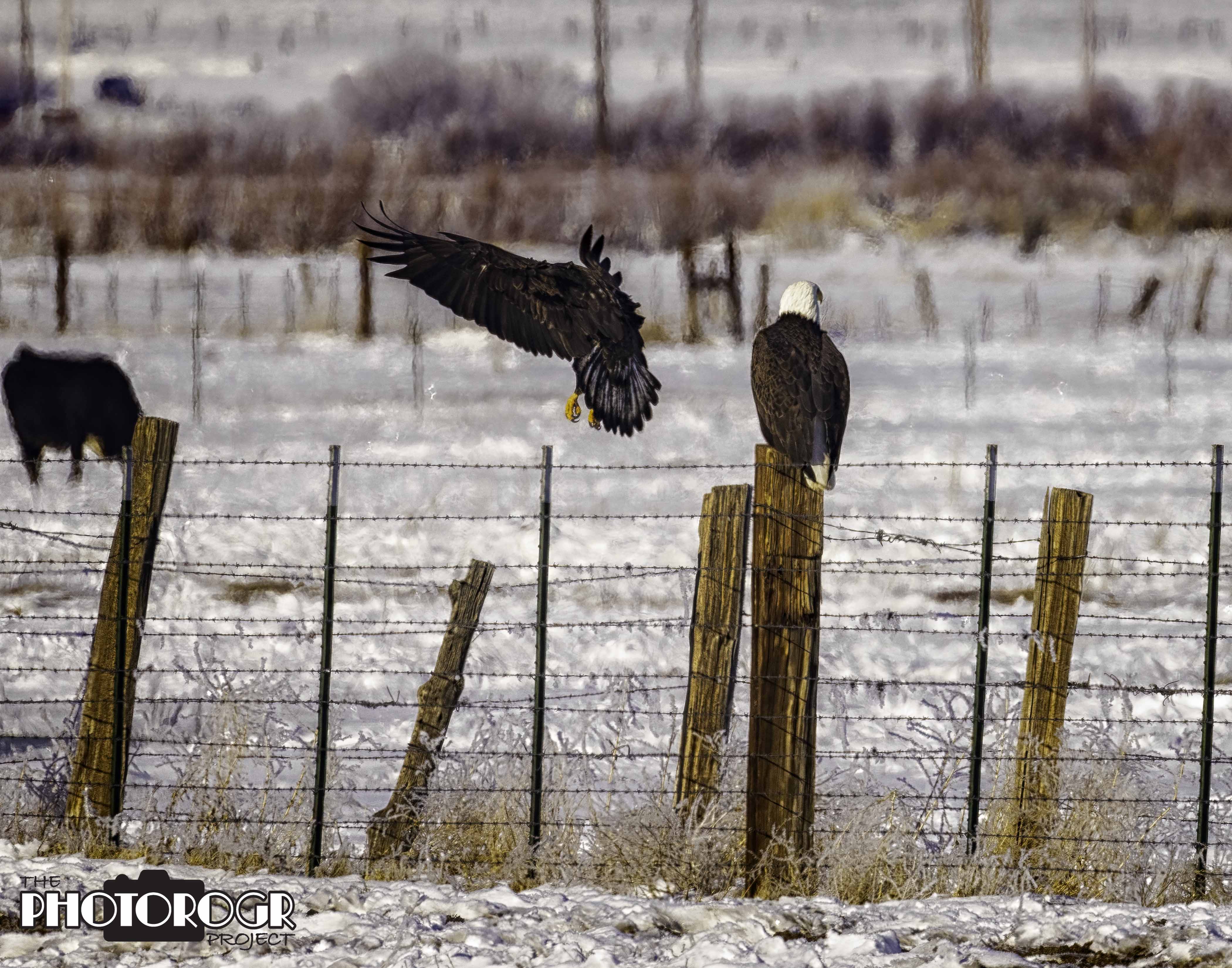
There were two hot zones for Eagles in 2023. This is a fence line west of SR 88 between Mottsville Lane and Centerville Lane. When I saw pictures from one of my friends in this area, my ‘crud-addled’ brain couldn’t identify the fence. Of course, I wasn’t remembering that long focal lengths will cause the depth of field to compress, giving what we see every day a different look as a picture. One cannot forget the physics of capturing light!It doesn’t get any better than this – well, maybe if they were a little closer! This tree at the west end of Cornforth Lane was a popular place to find Eagles.Same fence, different angle! There were so many Eagles that they almost needed air traffic controllers!
A second hot zone was on Old Foothill Road, just south of the state line.
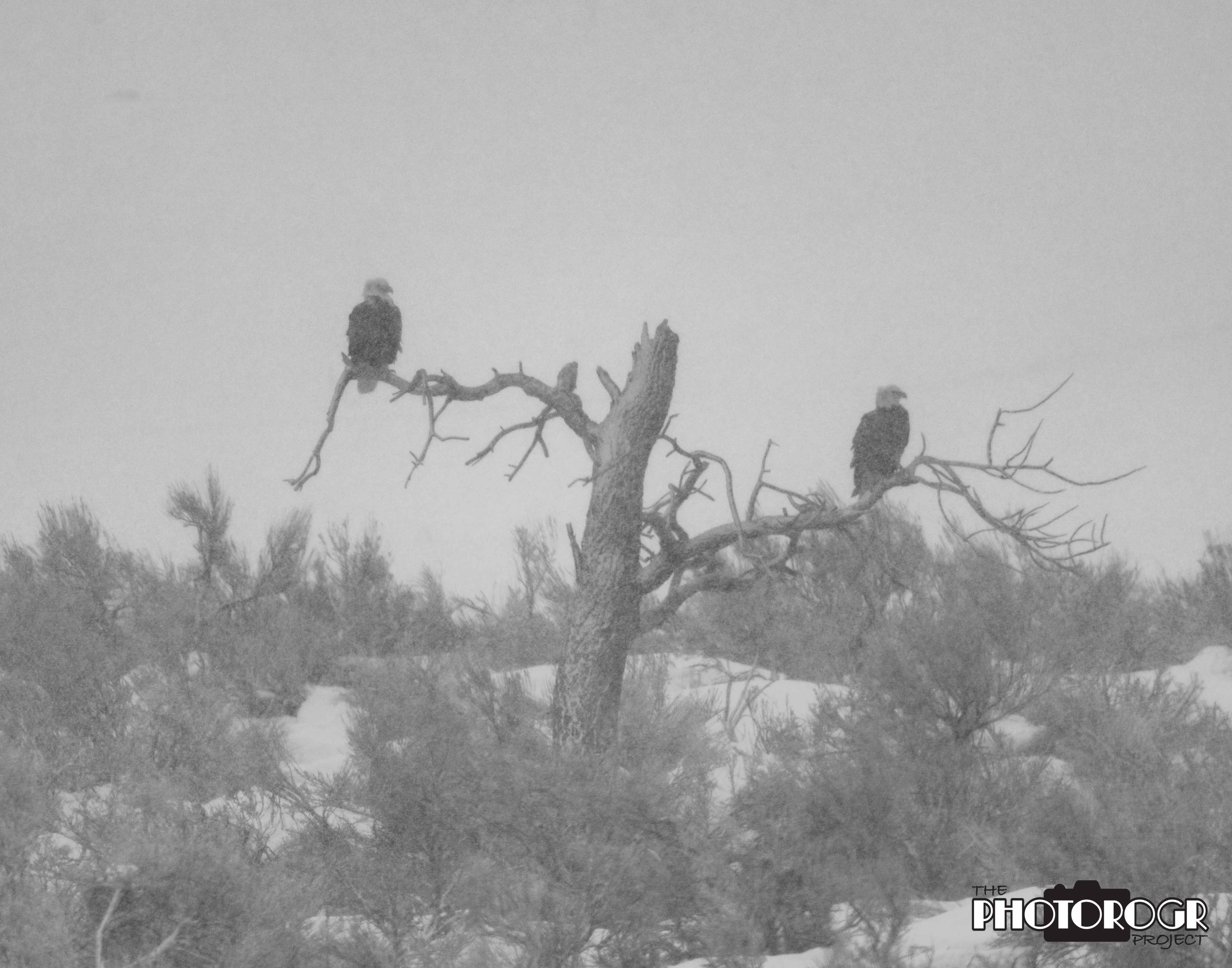
The only Eagle I was able to get up close in the Valley this year. I don’t stop for Raptors on utility poles very often, but I couldn’t pass this one by. I was kneeling in the snow, getting as low as I could, to keep the wire from obscuring that beautiful face.For some reason, this tree was a popular stop for the Eagles this year. I made this image in a snow storm. When I stopped and got out of the car, a third Eagle flew off. Wouldn’t this picture have been really great with another Eagle?Same tree as above, but on this day we had the best light we’d seen at this location. (Except for the snowy day, most of the images here were so backlit that the Eagles are shadows). I was excited to get some detail and color for a change.Although I focus (pun intended) on Eagles from November to February every winter, the Raptor migration includes Hawks. I’m very selective about my Hawk images. No utility poles! I like my Hawks on a fence post at eye level. This Red Tail was on a utility wire and I felt something, so I started shooting. A few frames in he lifted off and hit the snow – coming up with this apparently tasty morsel. This is one of the many image files I have of this meal time.
And that’s it for my 2022-2023 Eagle Season! I’ll still have my cameras out and about and may bump into something, but I won’t be actively looking for Eagles for the next 10 months or so. Stay tuned for the rest of the ‘Be There’ series because there’s lots more to come (Bison and Big Horns and Elk – oh my!)! Enjoy – PHOTOROGR
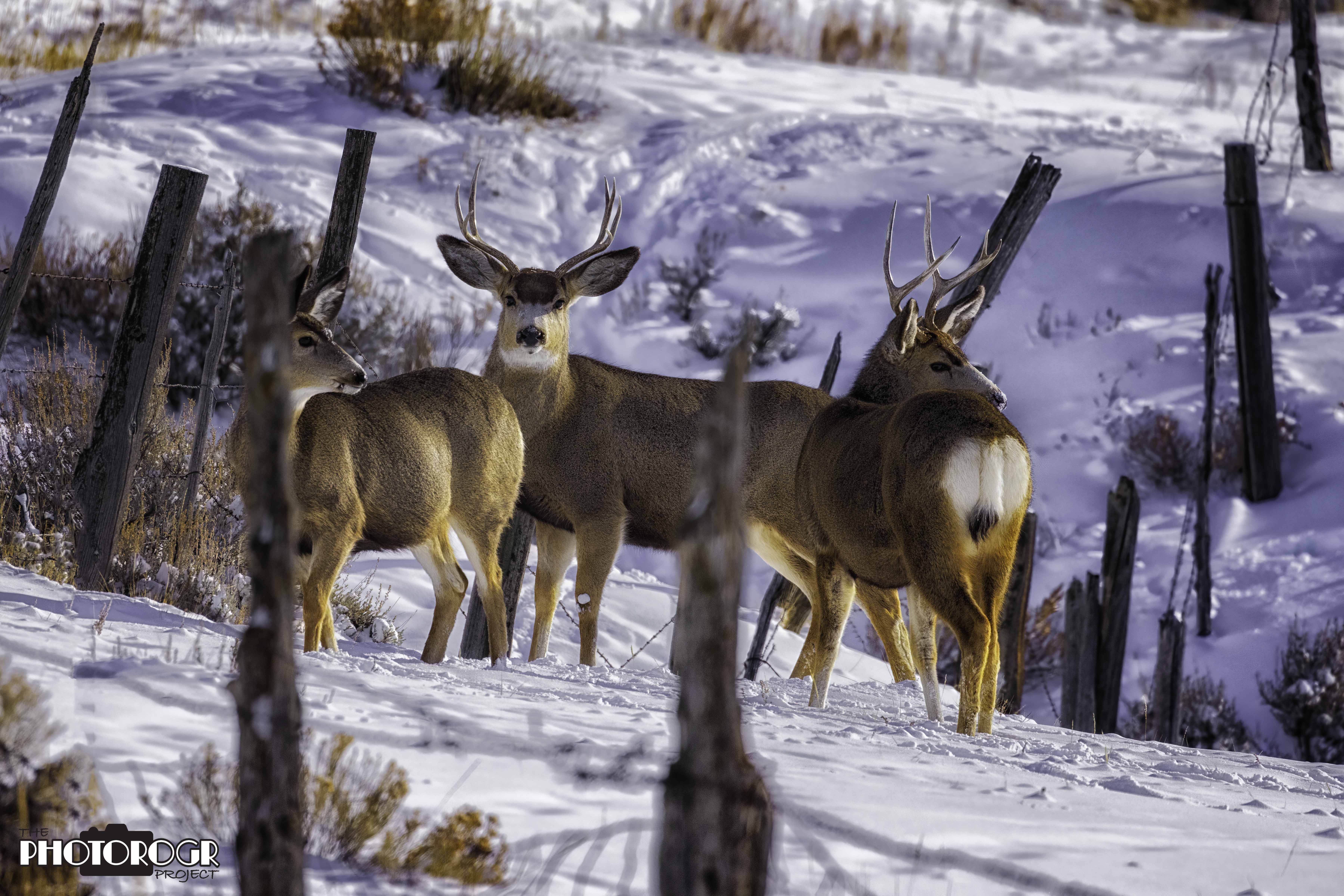
In part 3 of the ‘Be There’ series, I’m highlighting the beautiful Deer that my brother-in-law and I found in the Meeteetse WY area, near Upper Sunshine Reservoir. We found these lovely creatures on the road to the Reservoir, and they were very accommodating for our cameras. My brother-in-law had expressed interest in ‘upping his photography,’ so we loaned him my lovely bride’s camera. He didn’t do too bad!
Enjoy – PHOTOROGR
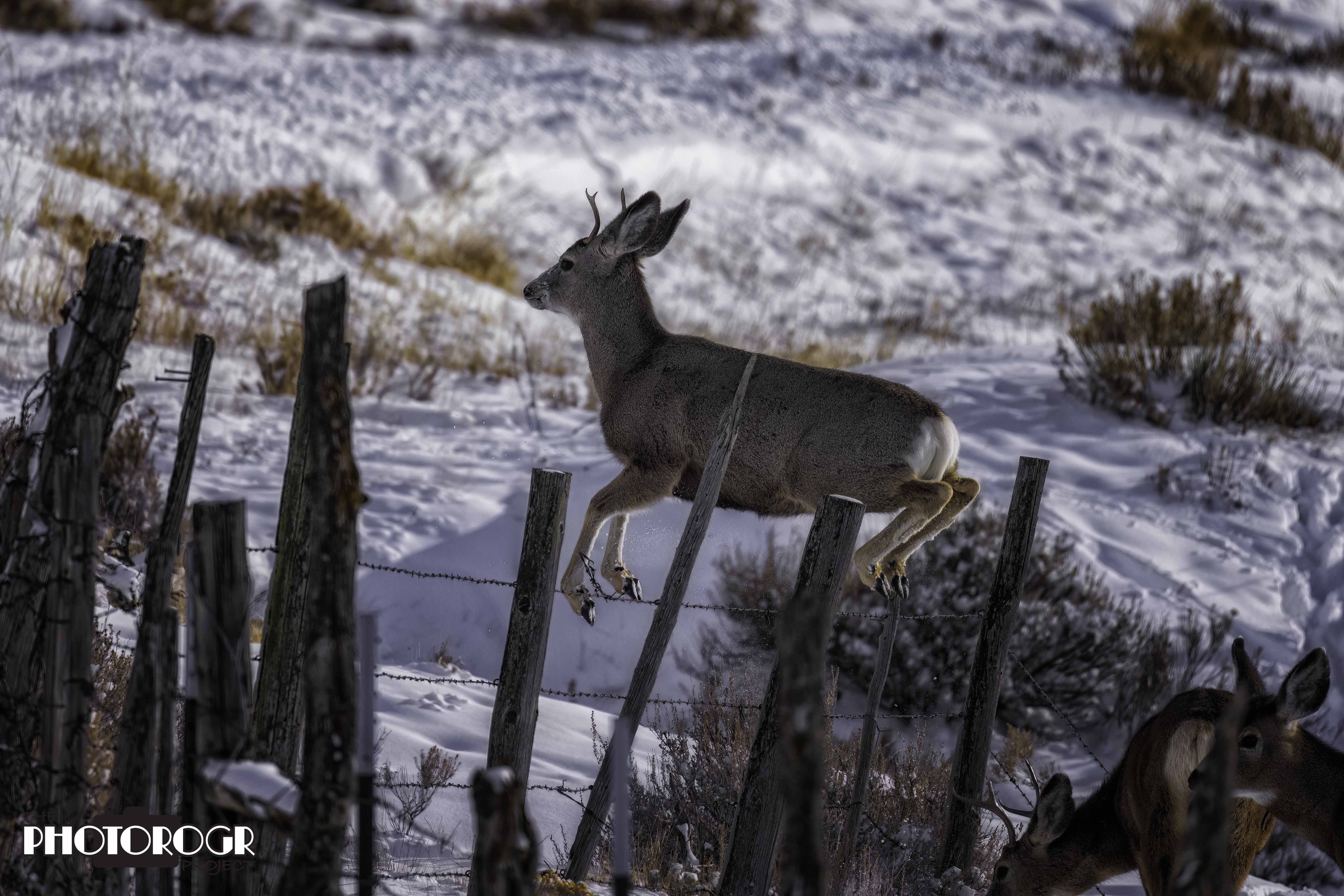
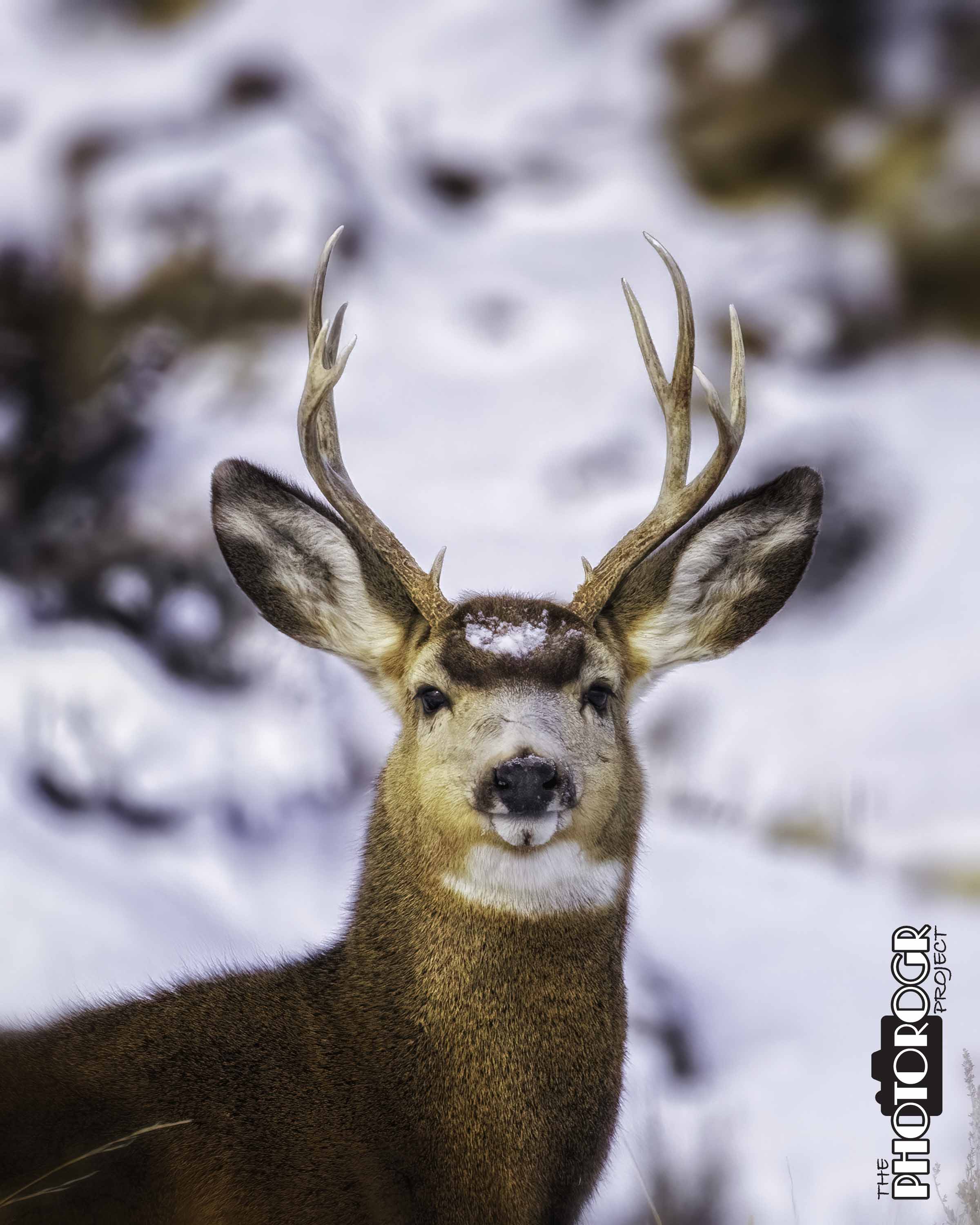
This herd was up hill from the road (obviously) and the rocks brought an interesting element to the composition. One of my brother-in-law’s shots, this herd was making their way up this wash towards the road.Breaking trail! This young buck was crossing above the wash. Thankfully for him, the snow wasn’t too deep in this area.The herd moved right to left and were contemplating their options to jump the fence and cross the road. Animal behavior is interesting. Deer will jump fences. Pronghorn Antelope will dive under a fence. Bison will just walk through a barbed-wire fence!Decision made – up……and over!The obligatory wildlife portrait! A good looking specimen!
In my last blog, I discussed the importance of getting out there. One cannot make great images unless one is in a place to do so. Shortly after I made that post, my lovely bride and I departed for Christmas in Wyoming with family. We left on a beautiful Monday morning, overnighted in Utah, and arrived at my lovely bride’s brother’s home in Powell WY on Tuesday. The plan was to head to Billings MT the next day, Wednesday, for a Christmas play. We woke to blowing snow and temperatures in the minus 30’s and 40’s! With roads in the area closed, we didn’t get to the Christmas play.
When the storm subsided, my brother-in-law and I headed out to the Greybull River and Meeteetse WY area to check out the wildlife scene. We saw some Eagles and Deer along the Greybull River, Turkeys in Meeteetse, and Deer, Bison and Eagles on the ranches west of Meeteetse. And it was cold! Thankfully, the heated seats in the F-150 made the trip a bit more bearable. Here’s a sample of the critters we saw that day! Enjoy – PHOTOROGR
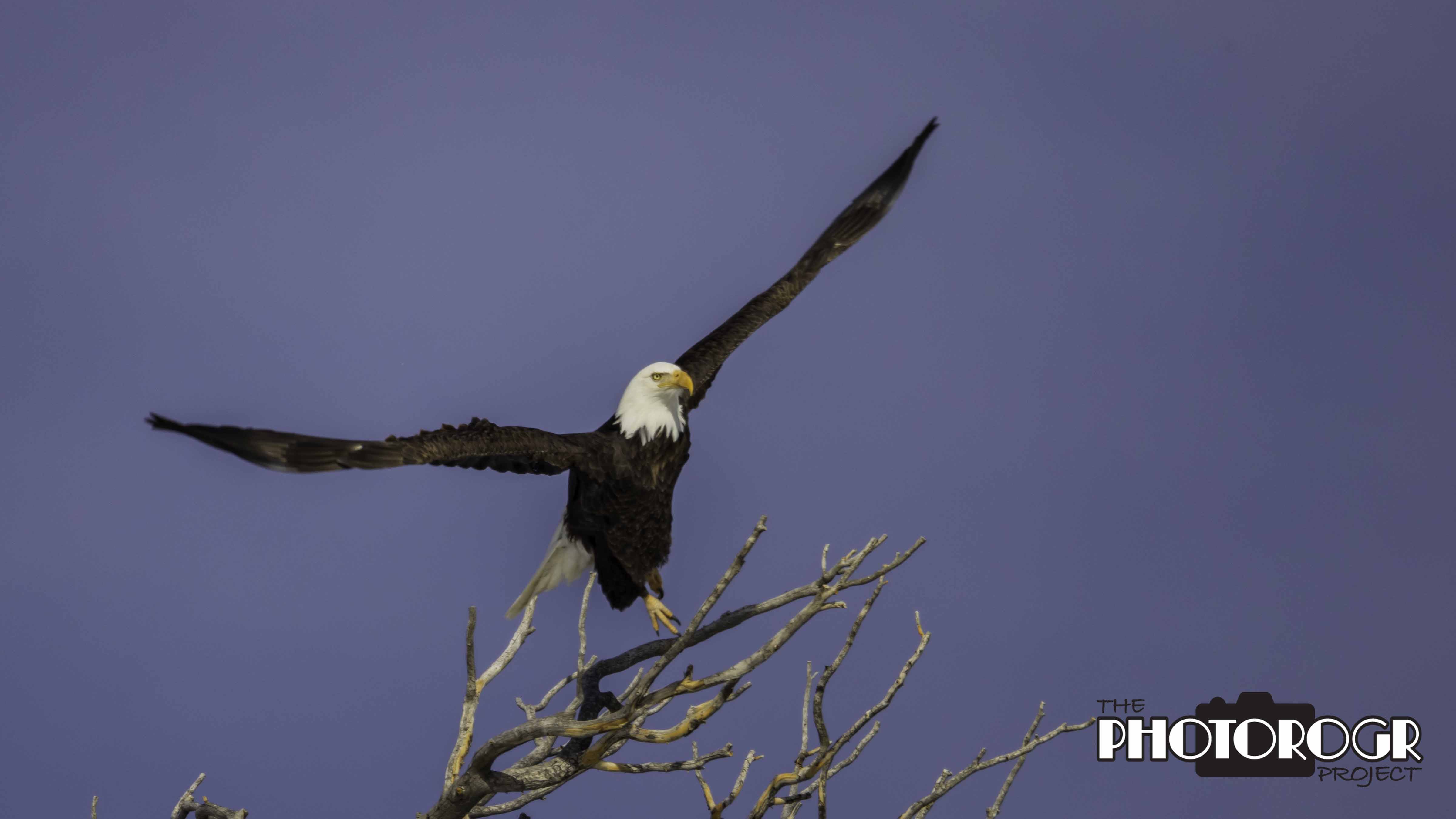
This handsome fella’ thought he was hiding in the brush!This Eagle was in a tree near the Upper Sunshine Reservoir. I grabbed a few shots, and he turned towards me……and took flight! I was in great position, had him firmly in my view finder……and was able to catch this amazing sequence. In the digital darkroom, I chose to replace the sky in this and the following images. This one is outside my comfort zone, but I really like the resultant image.The sky replacement is more subtle for this image.And a different sky for this one as well. I like that each image, while taken in sequence, has a different interpretation from the editing. I hope you like it, too!











 The PHOTOROGR Project